
Article

How to Choose the Right Wood Species
Discover how different wood species influence the beauty, durability, and character of architectural woodwork
The wood species you choose plays a significant role in the appearance, performance, and longevity of custom doors and architectural millwork. Each species offers unique characteristics, from color and grain patterns to durability and finishing options. Whether you’re selecting exterior doors, interior trim, custom mouldings, or decorative architectural elements, understanding the differences can help you make the right choice for your project.
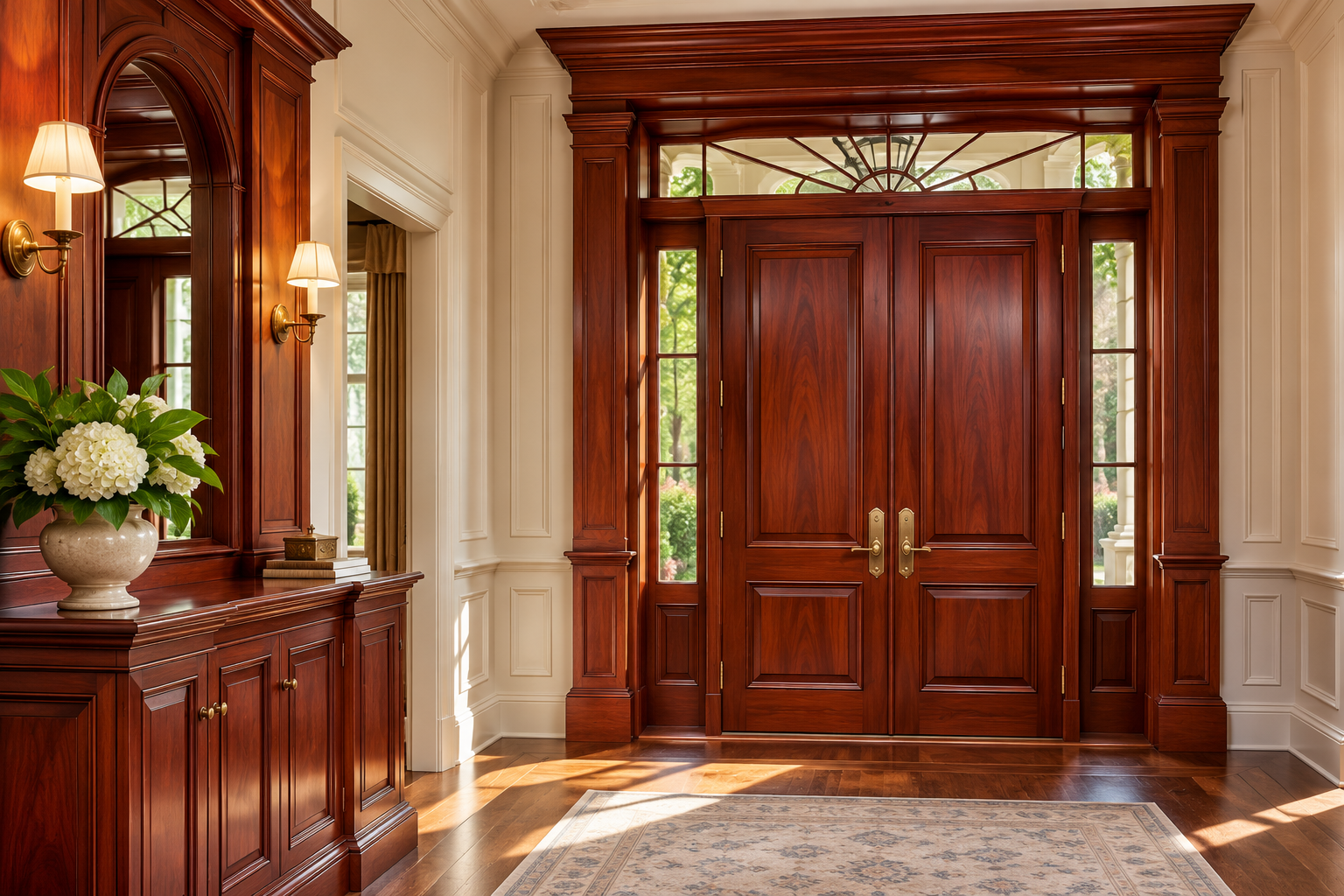
1. Mahogany
Mahogany has long been associated with fine architectural woodworking. Its rich reddish-brown color, generally straight grain, and smooth texture make it a popular choice for luxury entry doors, decorative mouldings, and custom millwork. Certain mahogany species also offer good dimensional stability and natural durability, making them suitable for exterior applications when properly constructed and finished. Mahogany is particularly well suited to traditional, Colonial, and historically inspired architecture.
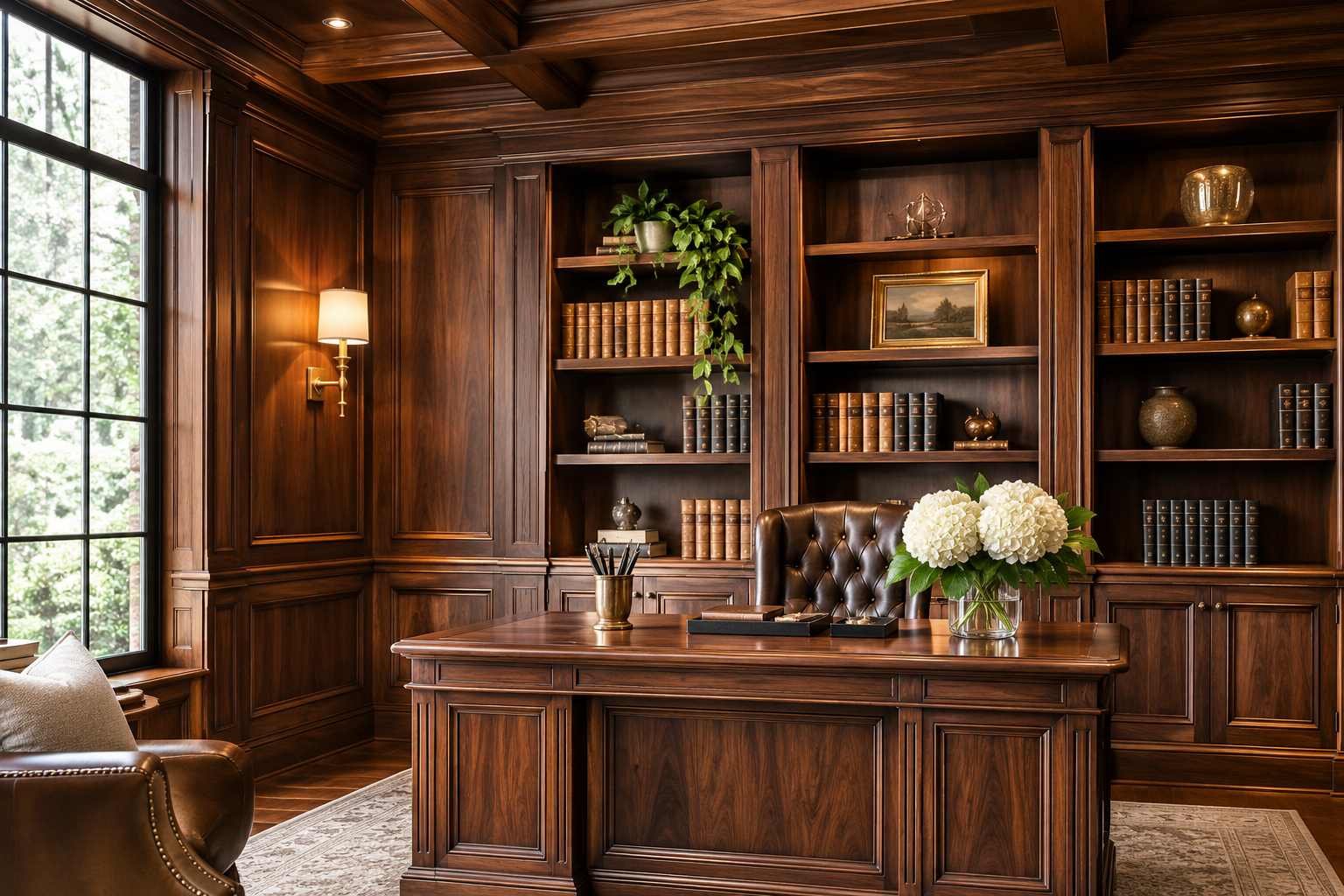
2. Sapele
Sapele is one of the wood species frequently used by Willingham Sash & Door, particularly for custom exterior doors. With its warm reddish-brown color, attractive grain, and excellent finishing characteristics, Sapele offers an appearance similar to mahogany, often at a more affordable price. Its distinctive interlocking grain can produce a beautiful ribbon-like pattern, especially in quarter-sawn lumber. Sapele is also used for interior doors, architectural mouldings, and decorative millwork, making it a versatile choice for projects that demand both beauty and value.
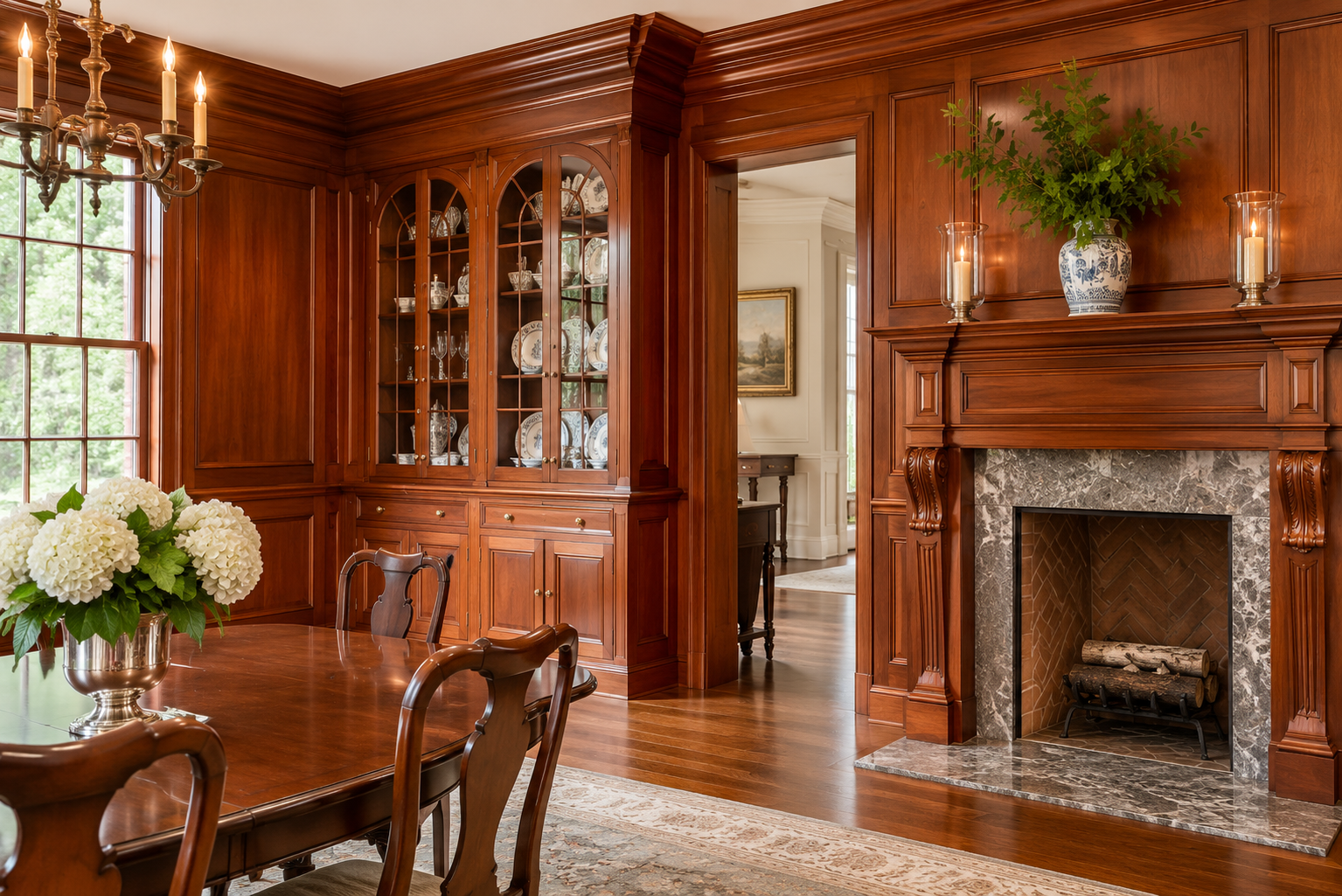
3. Oak
Oak is valued for its strength, durability, and prominent grain pattern. Quarter-sawn white oak is particularly distinctive, displaying attractive ray flecks that have made it a favorite in Craftsman and Arts and Crafts architecture. Beyond doors, oak is widely used for custom cabinetry, wall paneling, stair components, and interior architectural millwork. Its versatility allows it to complement both traditional and contemporary designs, with finishes ranging from natural light tones to deep, rich stains.
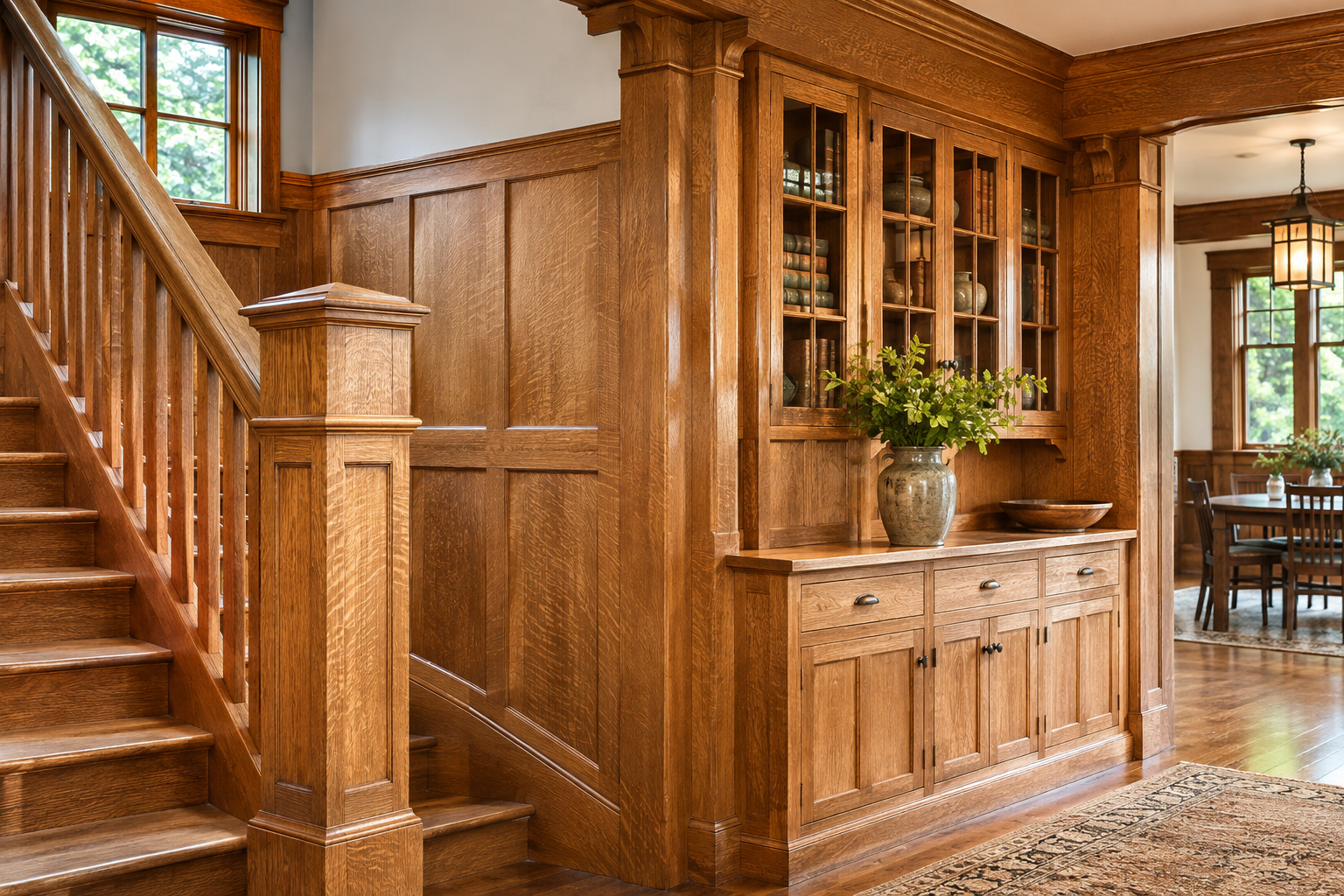
4. Walnut
American black walnut is known for its deep chocolate-brown color, flowing grain patterns, and luxurious appearance. Its natural richness makes it an excellent choice for custom interior doors, library paneling, built-in shelving, and decorative architectural millwork. Walnut works particularly well in traditional studies and contemporary interiors where the natural beauty of the wood is a focal point. It is generally best suited for interior applications.
5. Cherry
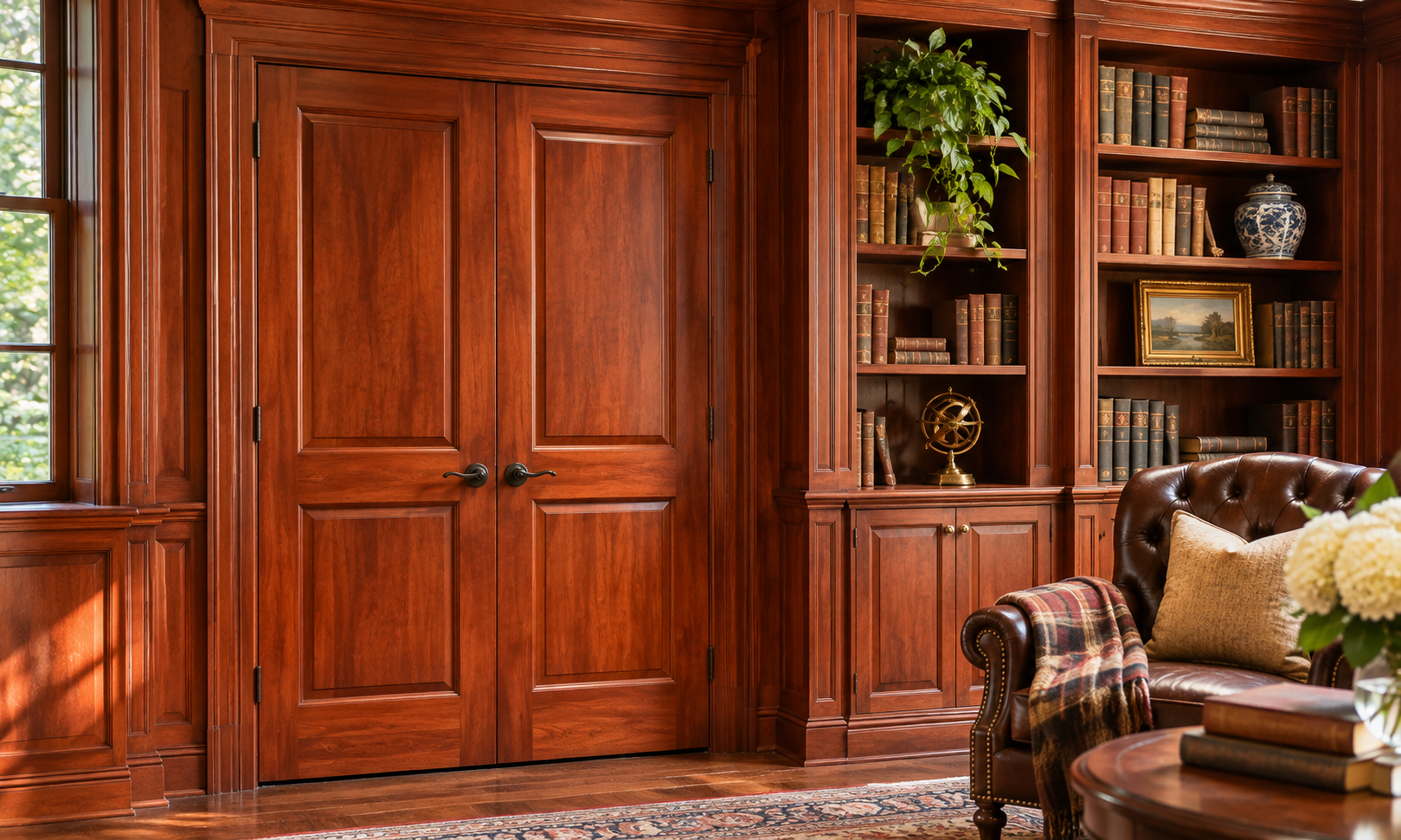
Cherry is prized for its smooth grain, warm reddish tones, and beautiful natural aging process. Exposure to light gradually deepens its color, creating an increasingly rich appearance. Cherry is especially attractive in traditional interiors, including custom doors, built-in cabinetry, decorative mouldings, and wall paneling. Its fine, consistent texture also makes it an excellent choice for detailed architectural woodworking.
6. Cypress
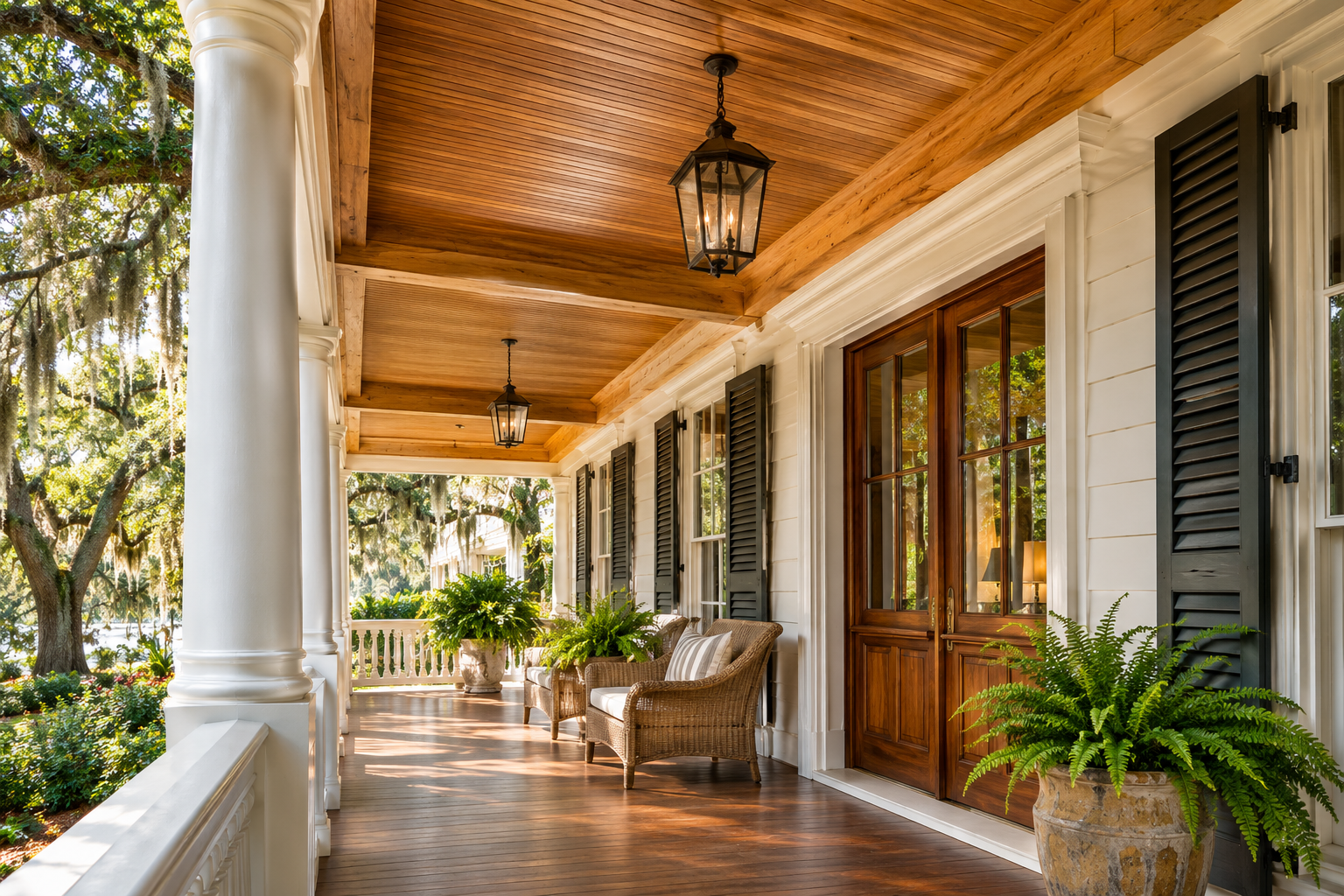
Cypress has a long history in Southern architecture, particularly in applications where moisture resistance is important. Its distinctive grain and natural durability make it a popular choice for porch ceilings, exterior trim, shutters, and architectural millwork. Cypress can be stained to highlight its natural character or painted to complement traditional architecture. Pecky cypress, known for its unique textured appearance, is also frequently selected for decorative ceilings and interior accents.
7. Poplar
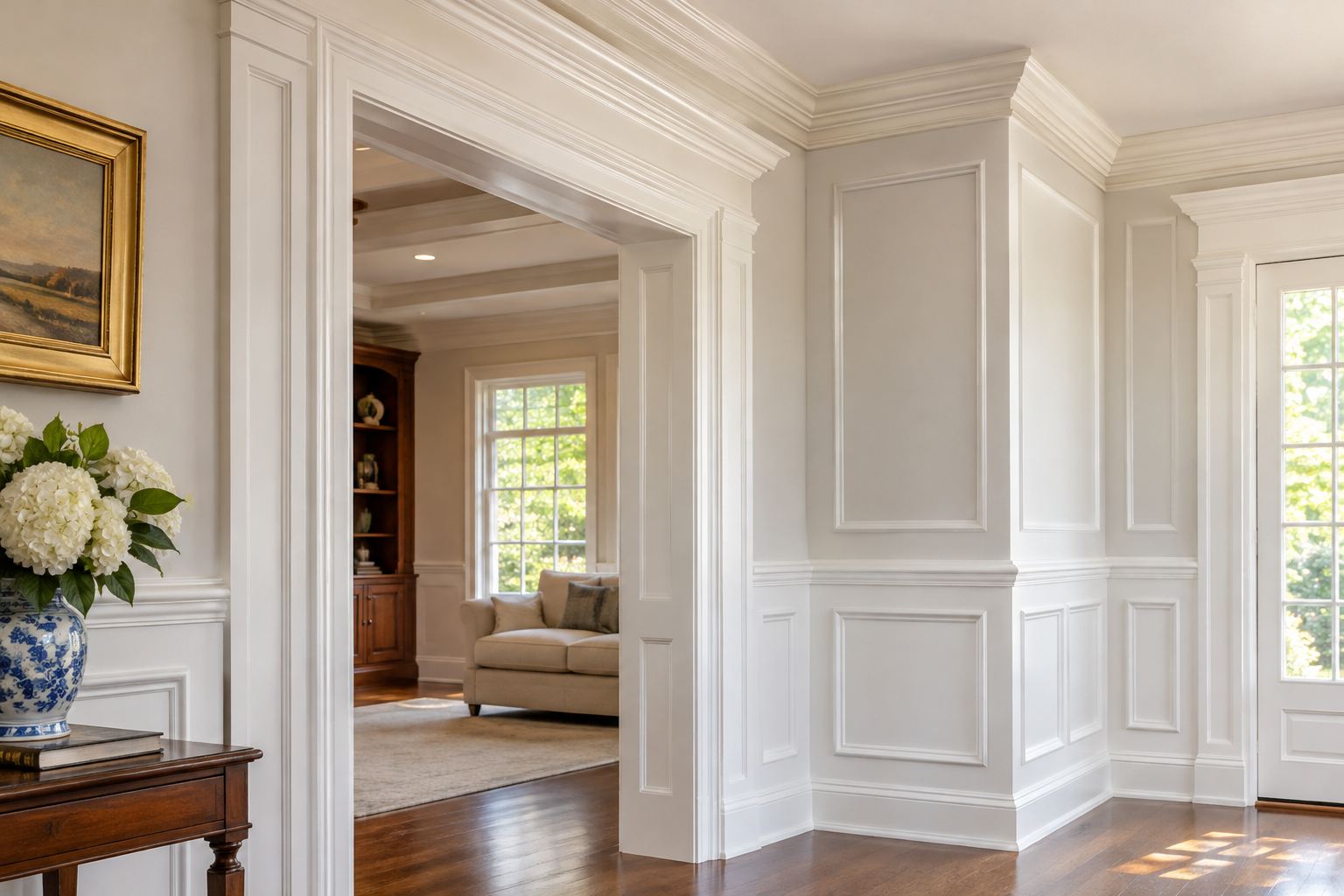
Poplar is a versatile and economical hardwood frequently used for interior mouldings, door casings, baseboards, and other painted architectural details. Its smooth texture and excellent machining characteristics make it especially suitable for detailed trim profiles. While poplar may not have the dramatic grain patterns of walnut or oak, it provides a beautiful foundation for painted millwork, making it an attractive option for both traditional and contemporary interiors.
Choosing the Best Wood for Your Project
Selecting the right wood involves balancing appearance, durability, cost, and intended use. Exterior doors require materials suited to changing weather conditions, while interior millwork offers greater flexibility in wood selection. The desired finish also matters: some species are best showcased with natural stains, while others are ideal for painted applications. Understanding these differences helps ensure that your architectural details look beautiful and perform as intended.
Quality Woodwork Starts With the Right Materials
Since 1882, Willingham Sash & Door has supplied quality doors, windows, and architectural millwork for new construction and historic restoration projects. Whether you’re selecting Sapele for custom exterior doors, walnut for a distinguished interior, or poplar for detailed painted mouldings, our team can help you explore materials that complement your architectural vision.