
Article

Custom Millwork Details That Elevate Your Home’s Design
A beautiful home is defined by more than its size, floor plan, or finishes. Often, it’s the architectural details that give a home its character. Custom millwork—including columns, pilasters, arches, trim, lattice, shutters, doors, and windows—can transform an otherwise simple design into one that feels distinctive and thoughtfully finished.
Whether you’re building a new home, renovating an existing property, or restoring a historic structure, the right architectural millwork can add depth, proportion, and visual interest. Even relatively targeted changes can make a noticeable difference to a home’s exterior.
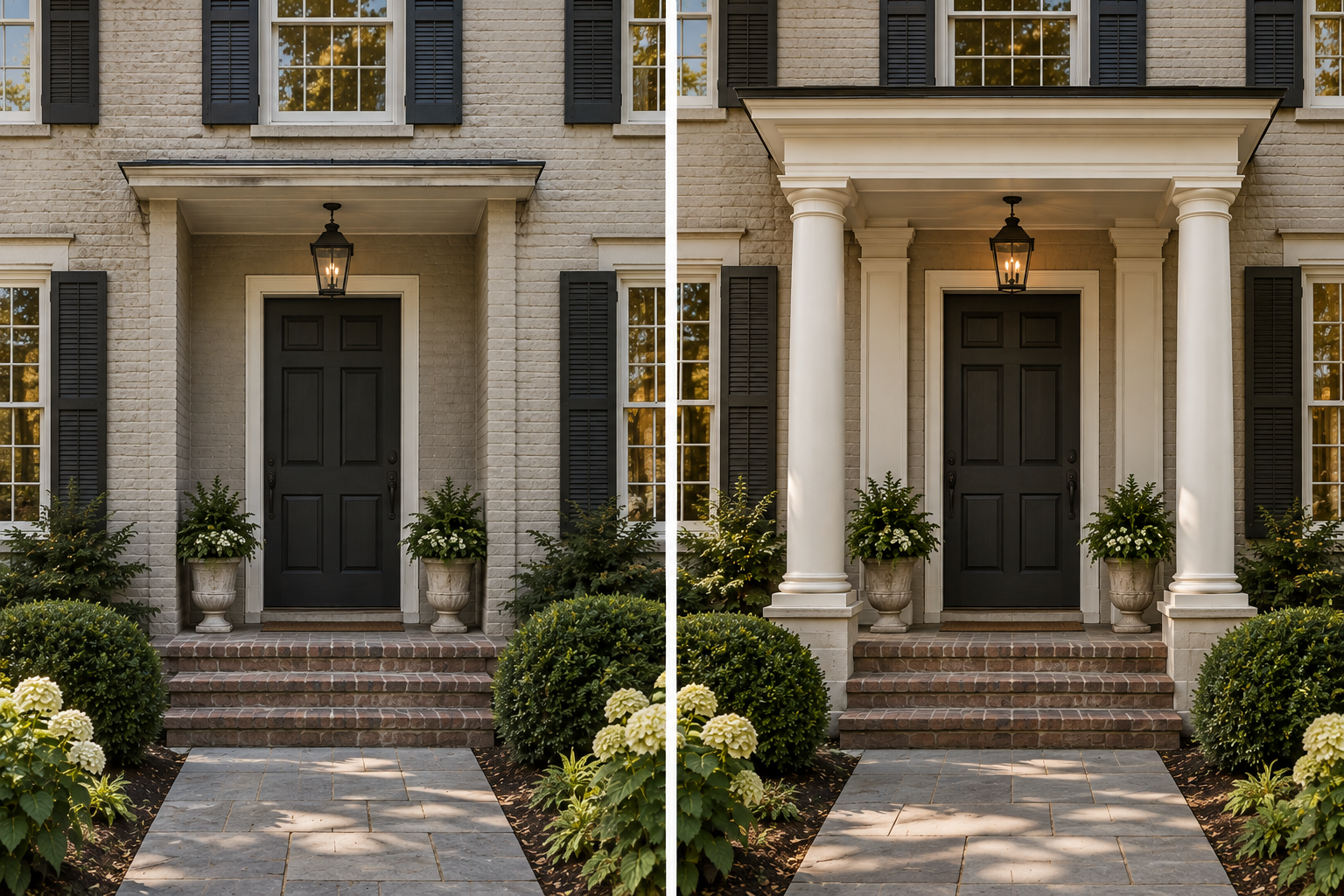
1. Columns and Pilasters
The front entrance is a natural place to add architectural character. Custom columns and pilasters can give an entry more presence while helping visually connect the doorway, porch, and surrounding architecture.
Columns can also change how the proportions of a façade are perceived. Because of their vertical form, they can emphasize height and provide visual anchors for the exterior.
Design tip: Choose columns that are appropriately scaled to the home. A substantial porch or tall façade may call for larger columns, while smaller homes often benefit from simpler profiles. Pilasters are another option when you want architectural detail around an entrance without adding freestanding columns.
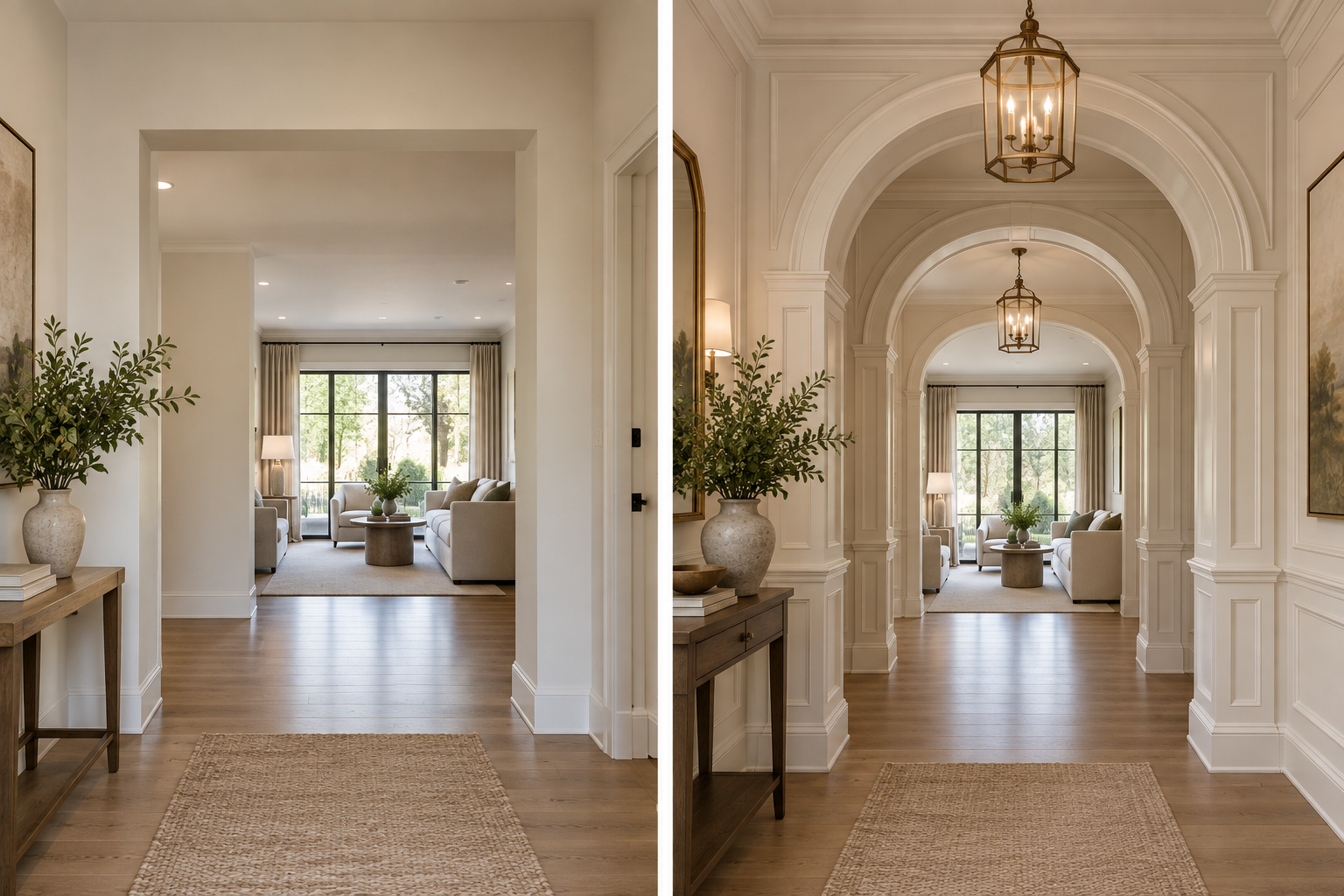
2. Arches and Radius Millwork
Straight lines dominate most homes, which is exactly why a well-placed arch can make such an impact.
Custom arches and radius millwork can be incorporated above doors, windows, porches, passageways, and other architectural openings. Curved details break up long horizontal and vertical lines and can create a graceful transition between different parts of the design.
Design tip: Repeat an arch shape elsewhere in the architecture when possible. For example, an arched entry can be complemented by radius trim or an arched window. Repeating shapes helps the design feel intentional rather than decorative for decoration’s sake.
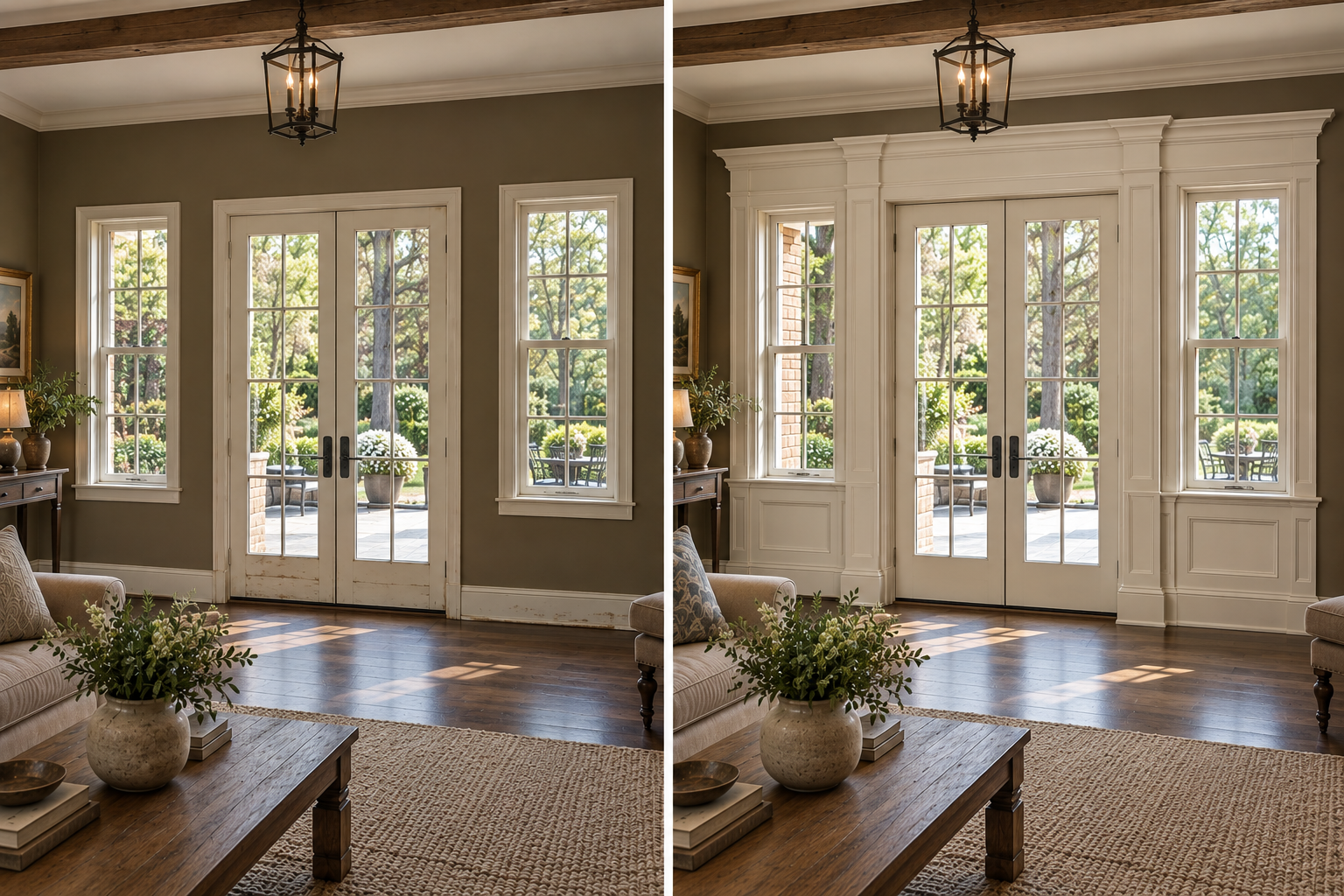
3. Use Trim
Trim is one of the easiest architectural elements to underestimate. Window and door casings can dramatically change how substantial those openings appear.
Custom trim can also be fabricated to reproduce an existing profile, making it particularly valuable for historic home restoration and renovation projects where standard mouldings may not match the original woodwork.
Design tip: Think about proportion before adding more ornamentation. Wider or more dimensional trim can sometimes create greater impact than adding numerous decorative details.
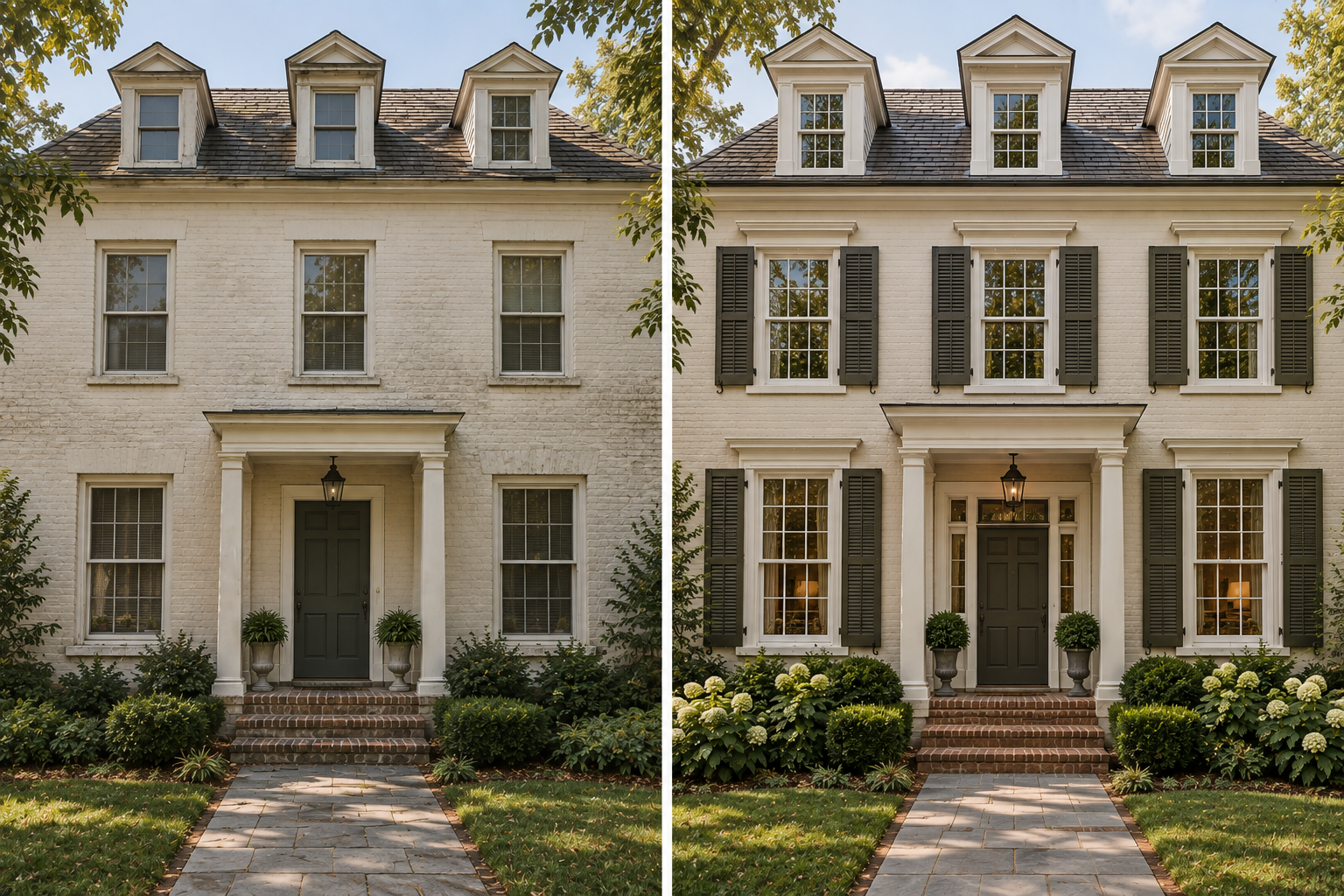
4. Use Shutters
Exterior shutters can introduce color, dimension, symmetry, and traditional architectural character. Depending on the home’s style, options can include louvered shutters, raised-panel shutters, board-and-batten shutters, Bahama shutters, and combination shutters.
The difference can be significant even when very little else about the façade changes.
Design tip: Proportion matters. Shutters should look appropriate for the window they’re paired with rather than appearing undersized or simply attached as an afterthought. Choose a shutter style that also makes sense with the home’s architectural period and overall design.
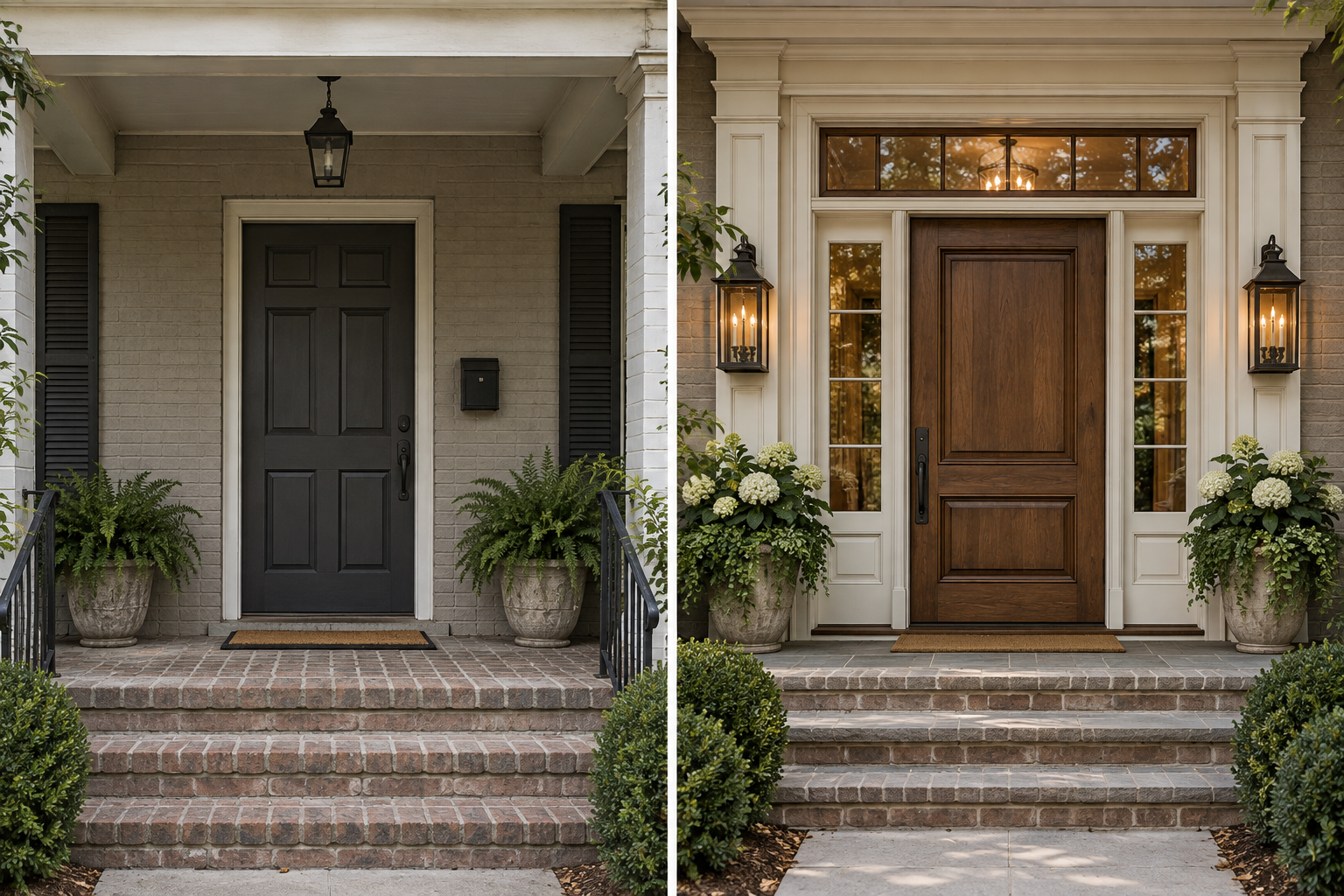
5. Front Door
A custom wood door can become one of the defining features of a home’s exterior.
Custom fabrication provides considerably more design flexibility than standard doors, including size, wood species, panel configuration, glass, moulding profiles, and other architectural details.
Design tip: Rather than choosing the door independently, consider the entire entrance as one composition. The door, sidelights, transom, pilasters, columns, trim, and surrounding architecture should complement one another.
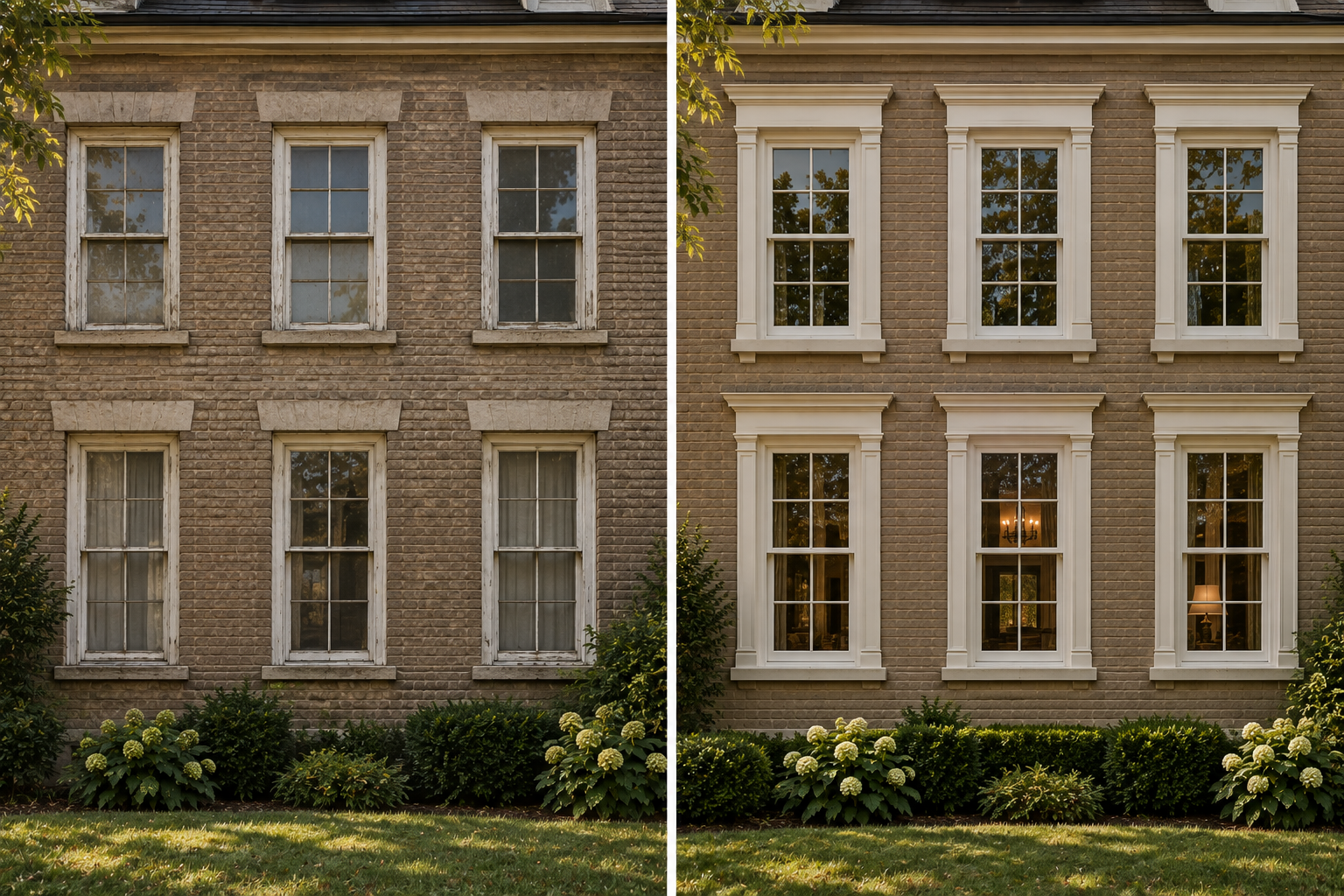
6. Don’t Overlook the Windows
Windows contribute significantly to the rhythm, symmetry, and proportions of a façade. Their size, placement, divided-light pattern, trim, and relationship to surrounding architectural elements can all influence how a home looks.
This becomes especially important in historic restoration, where replacing an original window with something that has noticeably different proportions or profiles can change the character of the building.
Design tip: When restoring an older property, look to the original architecture for guidance. Reproducing important dimensions, profiles, and divided-light patterns can help new windows blend naturally with the structure.
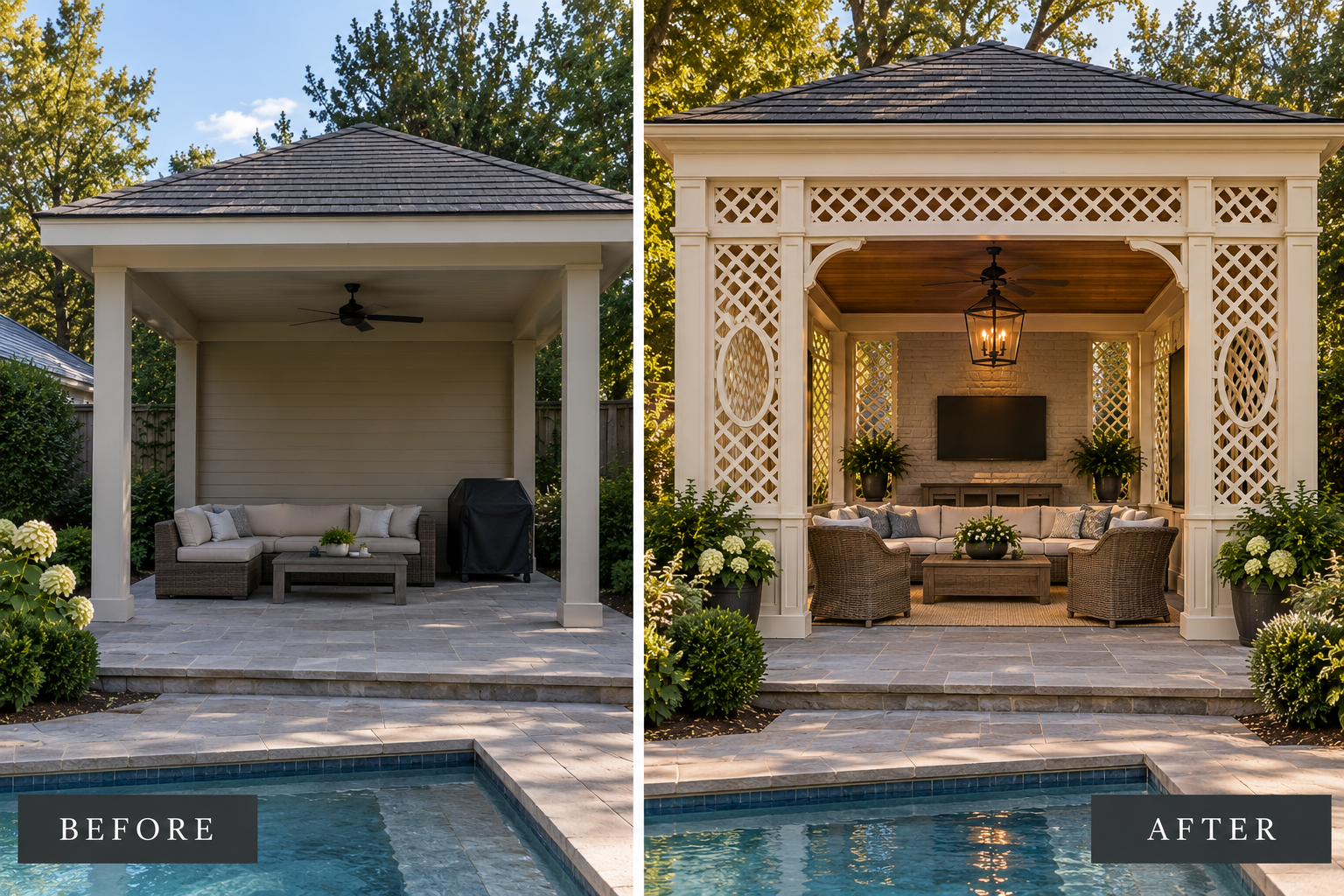
7. Custom Lattice
Custom millwork doesn’t have to stop at the main house. Wood lattice and decorative panels can add architectural interest to porches, cabanas, outdoor kitchens, garden structures, and other exterior living spaces.
Lattice can provide screening and privacy while also becoming part of the design itself.
Design tip: Instead of treating lattice as something used simply to conceal an area, incorporate it into the architecture. Custom dimensions, framing, and patterns can make it look like a deliberate extension of the structure.
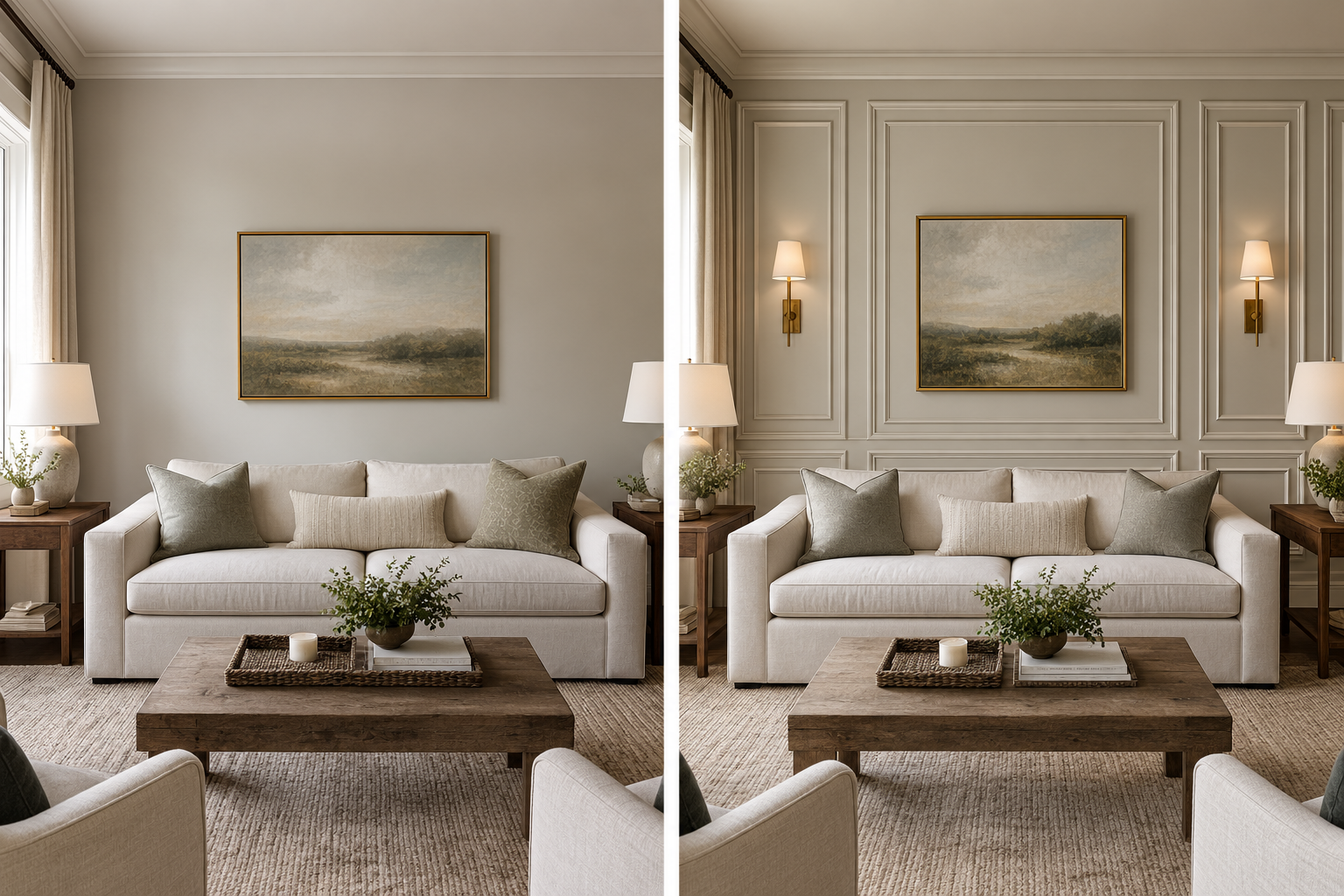
8. Repeat for a Cohesive Design
One of the most effective ways to elevate a home’s design is also one of the simplest: repeat key architectural elements.
If a particular profile appears around the front door, consider carrying a related detail into the windows. If wood is featured in the front door, it might be echoed in shutters or another exterior element. If the home incorporates arches, repeating that shape elsewhere can help tie the architecture together.
Successful exterior renovations often use recurring materials and architectural elements to visually connect different areas of a home.
Small Details Can Make a Big Difference
Custom millwork doesn’t necessarily mean making a home more ornate. The goal is to add the right details, in the right proportions, for the architecture.
Columns can give an entrance presence. Shutters can bring dimension to a flat façade. Custom trim can make windows more substantial. A beautifully proportioned door can create a focal point. And carefully reproduced millwork can preserve the character of a historic property for another generation.
At Willingham Sash & Door, we manufacture custom wood windows, doors, shutters, columns, pilasters, arches, lattice, trim, and other architectural millwork for new construction, renovations, and historic restoration projects.
Whether you’re recreating an original architectural detail or designing something completely new, custom millwork gives you the flexibility to create details specifically for your project.
Have a custom millwork project in mind?
Contact Willingham Sash & Door at 478-743-2642 to learn more.